

Case Management
During placement, my supervisor gave me the opportunity to develop the individual support plan for the case that I mentioned earlier. Prior to developing the ISP, the child was observed on three separate occasions, and on the last observation, the educators and I completed the ASQ and Sensory Behaviour assessments. With the information gathered, I began to work on the ISP. At CICC, their ISP is comprised of two parts: the individual consultation report, and the individual goals and strategies (see images below). It was a good learning experience, as I had to make sure that the ISP was reflective of the program’s learning philosophy, and that it addressed the program’s and family’s goals for the child. As I wrote the ISP, I found myself thinking of different resources/strategies that we could introduce to the child’s family and educators.
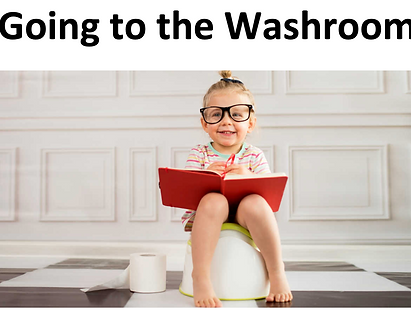
From the observations, I knew that the child loved books, and knew how to read. Therefore, social stories were one resource that I thought would be useful. Creating social stories was new to me, and I gained more experience from the guidance of my supervisor. I was taught to use real images rather than cartoons. I also made sure to use images that the child would easily be able to identify, and to use simple language (ABA Educational Resources, 2022). Throughout my placement, I created a number of social stories that addressed topics such as: dressing, potty learning, hair pulling, and etc. This is a tool that I want to continue to use in resource consulting.
The second resource I created was an indoor transitions choice board that was shown in the “Professional Communication & Consultation” section. During my second observation of the child, I noticed that when the routine was transitioning from clean-up time to lunch time, the child began to exhibit the challenging behaviour that the educators described. I brought up my observation to my supervisor, and as we continued to observe the child during this transition period, we saw the behaviour escalate. I asked the educators if they noticed the behaviour occurring more often during transitions, and they agreed that transitions seemed to be a trigger. With this knowledge, I wanted to introduce a choice board that could be used during transitions. The idea was to give the child the freedom of choice so that they had a sense of control (Vicker, n.d.). It presented them with an option to move from a situation (i.e., transition) that they did not like (Vicker, n.d.).
The third resource I created was a visual schedule. I made both a large size and portable version that the educators can use. The large size one was intended to be posted on the classroom walls, while the portable ones were to provide educators with an easy access when showing children the tasks/activity that they want them to do. This resource was intended to help the child be able to predict what will happen next, and that they understand what the expectations are (Vicker, n.d.). After creating the resources, my supervisor had me lead the meeting and educate the early years staff on how to use the resources in the classroom. I found myself applying all the knowledge that I have learned throughout placement. This experience made me feel like I was a part of the team, and helped build my confidence.
Individual Consultation Report


Individual Goals & Strategies


Social Stories


Visual Schedules

